DSCR Loan Rates for
Real Estate Investors
Compare your rate and total cost on the actual rental-property deal — start with a quick range, then get a firm upfront quote.
Excellent
Trustpilot
- Soft credit pull upfront
- Firm rate quote in as little as 48 hours
- Lending nationwide
What Determines Your DSCR Loan Rate?
On strong files, DSCR rates currently start in the low 6s and move with the market. Your exact rate depends on the whole deal — credit score, down payment or equity, the property's cash flow (DSCR), whether you're buying or refinancing, and the rate-and-cost structure you choose. HomeLife gives you a quick range first, then the firm numbers.
Start With a Quick Quote
Get an early rate and cost range with a soft credit pull — no full application to begin.
New — No-cost rental income estimate
Upfront: an instant AVM gauges your DSCR before you order an appraisal.
See how it works →
Buying, Refinancing, or Taking Cash Out?
Every DSCR loan starts with your investment goal. Whether you're buying a rental property, refinancing an existing investment, or accessing equity for your next purchase, HomeLife reviews your scenario to help determine your rate and loan options.
Buying
Get DSCR loan rates for your rental property purchase, based on the property’s rental income, your down payment and your credit score.
Refinancing
Get DSCR refinance rates for replacing a hard money or bridge loan with long-term financing, based on property value, rental income, equity and credit score.
Cash-out refinance
Get DSCR cash-out refinance rates to access rental property equity for your next investment, based on loan-to-value, rental income and credit score.
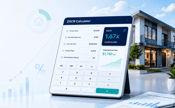
Firm Upfront Quote — Based on the Actual Deal
When you are ready for a firm quote, HomeLife verifies the full scenario - property value, rent, loan-to-value, credit score, DSCR, and investor goal. The result is a preapproval with a clear rate, itemized costs, and no guessing - often completed in as little as 48 hours after the required application, soft credit pull, property details, and rental income items are received. No estimates. No surprises.
What Drives Your DSCR Loan Rate?
Your DSCR rate is not based on one number alone. The strongest pricing usually comes from a stronger overall deal. Here is what matters most.
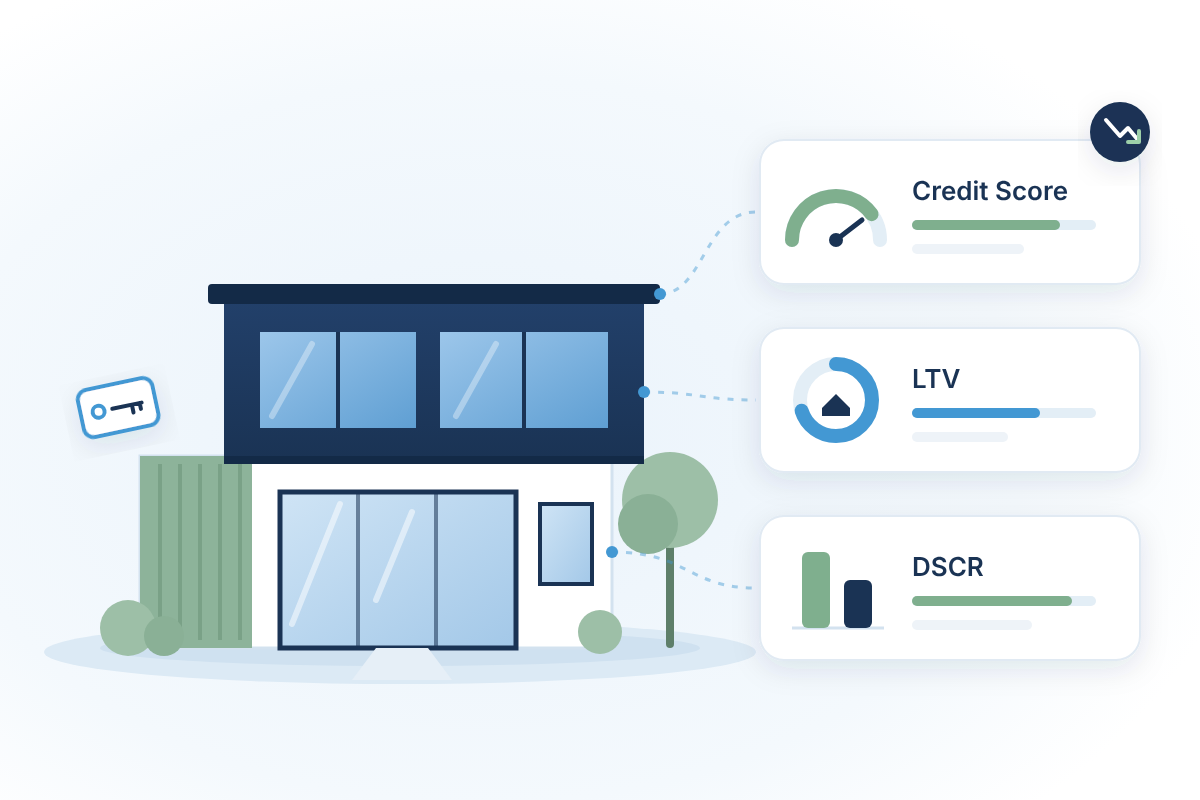
Credit Score
Higher credit scores generally improve DSCR loan pricing. Lenders typically use the middle score from the three credit bureaus.
Loan-To-Value Ratio
Loan-to-value (LTV) is a major DSCR loan pricing factor. A lower LTV generally means stronger rate options, whether through a larger down payment or more equity in the property.
DSCR Ratio
The DSCR ratio compares rental income to monthly housing expenses. A stronger DSCR ratio can improve loan pricing and program options.
Loan Purpose
DSCR loan rates vary by loan purpose. Purchase, rate-and-term refinance, and cash-out refinance loans may have different pricing, with rate-and-term refinances typically offering stronger rates.
Property Type &
Rental Strategy
Property type can affect DSCR loan pricing, including single-family homes, condos, townhomes and 2–4 unit properties. Long-term and short-term rental strategies can also affect rates.
Loan
Amount
DSCR loan rates may vary by loan amount, with standard, high-balance and larger loans falling into different pricing tiers. The loan size and available lender programs can influence the interest rate and cost options.
Rate & Cost Structure
Your DSCR loan rate and upfront costs depend on the pricing structure you choose. Options may include discount points, no-origination-fee pricing, lender credits, interest-only payments and prepayment penalties.
Rate Tip
Three key factors can help you secure a lower DSCR loan rate: a higher credit score, a lower loan-to-value ratio and stronger rental cash flow (DSCR). Paying discount points may also lower your rate, depending on your investment strategy.
How Do I Get a Lower DSCR Loan Rate?
Three factors can help improve your DSCR loan rate: a higher credit score, lower loan-to-value ratio and stronger DSCR. Discount points may also reduce your rate, while lender-credit or no-origination-fee options can help lower upfront costs.
How Loan-to-Value Works for DSCR Loans
Purchase LTV
For a DSCR purchase, loan-to-value is based on your down payment percentage.
Example: If you put 25% down, the loan-to-value is 75%.

Refinance LTV
For a DSCR refinance, loan-to-value is based on the new loan amount divided by the property value.
Example: If the rental property is worth $1,000,000 and the new loan amount is $700,000, the LTV is 70%.
Simple rule:
Purchase LTV = 100% - down payment percentage.
Refinance LTV = loan amount divided by property value.
How DSCR Is Calculated
DSCR compares a property's monthly rental income to its monthly housing expenses (PITIA). A stronger DSCR ratio can improve loan pricing and program options.
DSCR = Rental Income divided by Monthly Housing Expense (PITIA)
Monthly housing expenses include:
- Principal and interest
- Property taxes
- Insurance
- HOA dues, if applicable
Example:
If the property rents for $5,000 per month and the monthly housing expense is $4,000 per month:
$5,000 divided by $4,000 = 1.25 DSCR
A DSCR of 1.0 means the property covers the monthly housing expense exactly. A DSCR above 1.0 shows stronger cash flow. A DSCR below 1.0 may still work in some scenarios - but pricing, leverage, or program options may change.
Not sure which DSCR program fits your property?
Which DSCR Lane Fits the Deal?
Not every rental property fits the same lane. That is why HomeLife reviews the numbers upfront before you move deeper into the file.
1.0+ DSCR
WHAT IT MEANS:
Property income covers the monthly housing expense
WHAT TO REVIEW:
Rate, LTV, reserves, and cost options
0.75-0.99 DSCR
WHAT IT MEANS:
Cash flow is close, but tighter
WHAT TO REVIEW:
Pricing, leverage, reserves, and program fit
No Ratio DSCR
WHAT IT MEANS:
Current rent or no rent does not tell the full story
WHAT TO REVIEW:
Credit, equity, property profile, investor experience, and plan for the asset
The DSCR number does not end the conversation. It tells you which loan lane to review next.
Not sure how your deal sizes up? Run the numbers before your first conversation.
DSCR Purchase Loan Rates
For a DSCR purchase, qualifying rental income may come from an existing lease or an appraiser's market rent survey.
To provide a firm upfront quote, HomeLife reviews your investor profile, credit score, purchase price, down payment, loan amount, property details, rental income, and estimated housing expenses.
What You Receive
An itemized fee worksheet, DSCR rate and cost options, down payment and reserve requirements, documentation requirements, and next steps — often within 48 hours after receiving the required information.
DSCR Refinance and Cash-Out Rates
Compare rate-and-term, a new structure, or cash-out.
HomeLife reviews property value, rental income, your current mortgage statement (if available), desired loan and cash-out amounts, property type, and monthly housing expenses. Cash-out refinancing typically carries a slightly higher interest rate than rate-and-term refinancing.
Rate-and-Term Refinance
Looking to improve your current DSCR loan? Compare interest rates, loan terms, and payment options without taking additional cash out.
Cash-Out Refinance
Access equity in your rental property for renovations, additional investments, or other financial goals.
What You Receive
A fee worksheet, rate and cost options, refinance structure, cash-out options if available, and next steps.
How HomeLife Provides Your DSCR Rate Quote
Simple Application
The basics on you and the property.
Soft Credit Pull
No impact to your credit score.
Property and Rent Review
Value and qualifying rent confirmed.
DSCR Calculation
Rent measured against the monthly mortgage payment.
Rate and Cost Options
Compare available loan structures, rates, and costs, side-by-side.
Itemized Fee Worksheet
Every cost laid out before you commit.
Want to compare Standard DSCR and No DSCR before reviewing rates?
Find the Right Rate and Cost Structure
The lowest DSCR rate is not always the best investor strategy. Some investors want the lowest available rate. Others want to preserve cash for reserves or the next acquisition. HomeLife helps compare the structure that fits the deal.
-
Pay points or a higher upfront cost to secure a lower interest rate — ideal for investors planning to hold the property long term.
-
Choose a slightly higher interest rate in exchange for lower upfront loan costs, when available.
-
A lender credit can help offset closing costs in exchange for a slightly higher interest rate, when available.
-
Interest-only payments can improve short-term cash flow and payment flexibility, particularly for investors stabilizing a rental property. Available on select DSCR loan programs.
-
Many DSCR loans offer prepayment penalty options, typically ranging from 1 to 5 years. A longer prepayment penalty period may provide a lower interest rate, while shorter terms offer greater flexibility.
The right choice fits your hold period, refinance plans, and exit strategy.
Why HomeLife Mortgage for DSCR Loan Rates?
Competitive Rates. Clear Deal Review. Proven Investor Results.
Rates and costs explained clearly — before you commit.
Communication every step — from application through closing.
Investor-focused deal review — priced on the property, not a template.
More DSCR program options — a broad lender network.
Proven experience since 1990 — over $4 billion funded.
Reviewed by Darrin Seppinni, President, HomeLife Mortgage — DSCR and investor-lending specialist, lending nationwide. NMLS #222264. In the mortgage industry since 1982; HomeLife has funded over $4 billion since 1990. Published author and McGraw Hill contributor, quoted by CBS News, with five HousingWire bylines.
Non-QM Mortgage Expert • Author • President of HomeLife Mortgage
DSCR Loan Rates FAQ
-
“Yes — an early rate and cost range with a soft pull and no full application.”
-
No.
-
The full deal: credit, LTV, DSCR, loan purpose, property type, loan amount, and cost structure.
-
No — they qualify on the property's rental income, not tax returns or W-2s.
-
1.0 means rent covers the payment; below 1.0 may still work depending on pricing, leverage, and program.
-
Program dependent.
-
Most DSCR loans include one; the standard term is 3 years.
-
Yes — rent can come from the lease or an appraiser's market rent survey.
-
Cash-out usually prices slightly higher than rate-and-term.
-
Often yes — reviewed on credit, equity, property profile, and experience.
-
Lower-ratio and No-Ratio options may fit.
-
Often in as little as 48 hours.
Ready to See Your DSCR Loan Rate Options?
Start with a quick quote — soft credit pull upfront, no obligation.
or Call 888-677-2526
How do DSCR Loans work?
Download our free eBook below to learn Everything you need to know about DSCR rental property loans.
What Our Self-Employed Borrowers Think
Darrin and team is superb! I had a stress free less than 30 day closing on my new investment property purchase. They did a “No Doc” loan for me where they only had a credit report requirement. The team is very responsive and kept me updated…
Sharmila S.
We used HomeLife for a bank statement loan since we are self employed and this was a fantastic experience! The entire team, Jayne, Darrin, Esther and everyone at HomeLife was a pleasure to work with and super responsive. I would highly recommend…
Amber A.
I would highly recommend Darrin Seppinni for your loan. I am here to say you do not have to go anywhere else. This great man and his wife Jayne and their staff got my wife and I a loan on a home with a 21 day escrow in the hottest sellers’ market…
Douglas Pettibone
I can't say enough good things about this company. Without them, I'd not be in the new home we dreamed of. As long as my tax returns don't support the mortgage value I need, these guys will be my first call! I've already referred 3 friends...
Sean M.